Are We Living in a Computer-Simulated Universe?
Interesting topic. So I’m going to answer it whether anyone else does or not.
I see everyone talking about evidence that our universe is simulated, but few mention why some “one” would simulate us and our universe. What is their intention? Of course, since we are the simulated ones, we cannot step outside the framework of the simulated world, so we might not even be able to understand the intentions of these “people” simulating us — the outside world may be incomprehensible to us. But let’s start by assuming our universe is real, and then try to explain why a simulated universe might exist. So the following analysis will begin from our existing knowledge and see if we can arrive at a simulated universe.
1. What is Reality?
Below is the traffic monitoring equipment we are all most familiar with. A camera captures vehicles speeding on the road and sends the images to a computer in the control center. We sit in front of the computer and can see which cars were speeding.
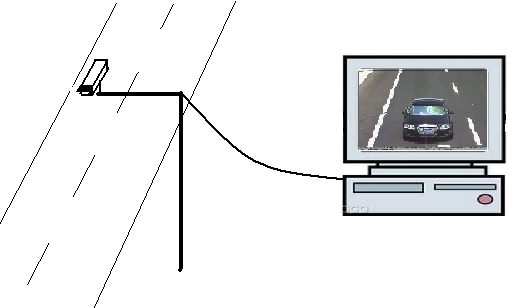
Now I ask you: is the image received by the computer real? (In other words, did a speeding car actually pass by on this road?) You probably think this question is absurd. Could the computer display be fake?
To answer this question, let’s look at how the entire system works. The camera collects light through a lens, the light is converted into electrical signals by the camera, and sent via cables (or electromagnetic waves) to the computer in the control center. The computer receives the electrical signals, processes them, enters the violation information into the database, and displays the photo. See the problem? The computer only receives a stream of electrical signals consisting of 0s and 1s. Under certain conventions, 0 represents 0 volts and 1 represents 5 volts. So what the computer “sees” is just a series of voltage waves. If we replaced the camera with a signal generator sending the same signal, the computer would receive the same signal, enter the same violation information into the system, and display an identical photo.
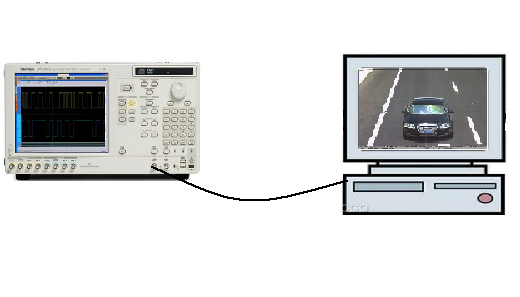
All of this seems perfectly reasonable — after all, we built the computer, so deceiving it with a fake signal doesn’t confuse us much. But what if we replace the computer with our brain?
We are actually very similar to this traffic monitoring example. The camera is our eyes, and the computer processing the camera’s information is our brain. The photoreceptor cells in our eyes receive light, generate electrical impulses, and transmit them along the optic nerve to our brain, where the brain processes them and we see an image.
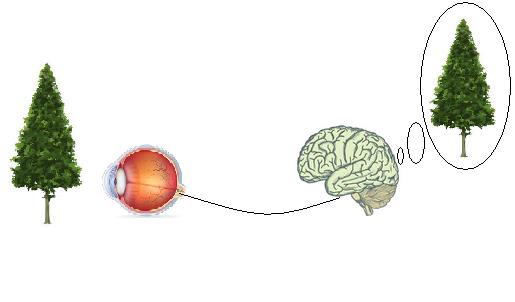
The optic nerve signals the brain receives are still fundamentally electrical signals. This means we could load an artificially generated electrical signal onto the optic nerve to deceive the brain. For the brain, a signal generated by the eyes and a signal generated by a signal generator are indistinguishable — because they are identical. So just as in the earlier example the computer recorded the violation information, our brain processes this fake signal without distinction and makes us see a truly real object. This object is as real as anything we see with our eyes.
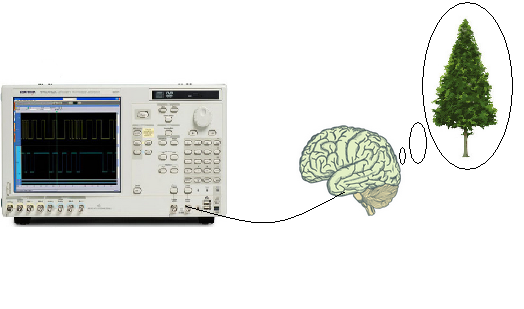
Beyond vision, all our other senses work the same way. That means we could deceive all our senses just like above. This includes hearing, touch, taste, smell, and so on. Even signals inside our bodies can be deceived, as long as we find the corresponding nerves. For example, the feeling of fullness or hunger comes from signals from the stomach, so we could simulate a feeling of fullness or hunger and load it onto the nerve connecting the stomach to the brain, and we would genuinely feel full or hungry.
Although using a signal generator to deceive the brain sounds a bit like science fiction, it is feasible in principle. In fact, we are not unfamiliar with the idea of the brain being deceived. While we cannot yet use a signal generator to fool the brain, we are all familiar with how alcohol, drugs, and other chemical substances can cause hallucinations. These chemicals actually interfere with the transmission of neural signals, disrupting the neural signals inside the brain, making us see things that are “unreal.”
Another example is mental illness. Some types of mental illness are caused by lesions in certain areas of the brain, generating chaotic signals that interfere with normal brain function. Some of these patients also experience hallucinations. So when mentally ill people say they see things, they may genuinely be seeing them — what they see is just as real as what you see around you.
So, by this point, you may have realized that what we see, hear, etc., is just a collection of electrical signals inside our brains. Since that’s the case, let’s go a step further and imagine taking a person’s brain out, placing it in some life-sustaining fluid, connecting all sensory nerves to a computer, using the computer to simulate the signals from these sensory nerves, and making the brain feel as though it is in a real world. Perhaps you’ve already guessed it — this is the brain-in-a-vat paradox.
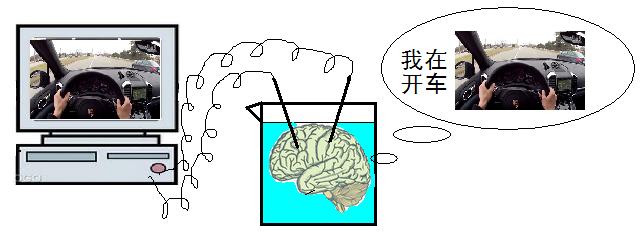
Of course, it’s not enough for the computer to only send signals to the brain — it must also read the signals sent out by the brain. For example, the brain sees a pile of shit, develops a desire to taste it, and sends signals to its motor organs (legs). The computer must read this signal, analyze the direction of movement, and discover that the brain is advancing toward a pile of shit. Therefore, the computer must update the signals being sent to the optic nerve, because as the brain moves, the image it sees should change. At the same time, the computer must update touch and auditory signals — because movement would involve feeling wind and hearing footsteps. When the shit is put into the mouth, the computer must update the signals to the taste nerves, making the brain experience an extremely foul taste. Next, the brain will send signals to discard the shit and yell, “This tastes terrible!” When the computer receives these signals, it will again update the output signals, allowing the brain to see and hear the corresponding things. This process repeats. As long as the computer simulates well enough, the brain will never detect anything wrong.
So, what is reality? Actually, nothing is real. What you see and hear are just the results of your brain processing signals from your sensors (eyes, nose, ears) and processing them. Here’s one final example: color. In the world, there is no such thing as color — there are only electromagnetic waves of different frequencies. Yet the brain attaches an attribute to these electromagnetic waves: color. In other words, color is something processed by the brain that does not exist in the external world. Therefore, it is entirely possible for some creature to claim it can see ultraviolet color. Because ultraviolet color is just a collection of electrical signals in its brain. Even if you cannot imagine ultraviolet color, remember: there is no color in the world; with a brain, there is color.
2. Beyond the Brain in a Vat
If you think the brain in a vat is crazy enough, let’s take the craziness up another notch.
Let’s go further. A brain in a vat still has a living brain. Is this brain necessary to constitute the brain in the vat? If the brain is merely a collection of nerve cells, can we replace them with non-living things?
The action pattern of a single nerve cell is very simple. Speaking loosely, a single nerve cell can be thought of as a weighted averager: it takes the weighted average of input signals, and if the result exceeds a certain threshold, it outputs a nerve signal; otherwise, it outputs nothing.
The behavior of a single nerve cell is this simple — yet when these simple cells form a network, they can constitute a brain as complex as ours. Isn’t that amazing? There’s more wonder to come. This simple behavior pattern can be completely replaced by a circuit element with the same function. If we connect many such circuit elements in the same way to form our brain, this “electronic brain” made of circuit elements should have the same function as a biological brain made of nerve cells. This electronic brain should have the same thought patterns, the same feelings, the same emotions, the same personality. In other words, this electronic brain is the original brain.
Of course, achieving this would involve countless difficulties, but we are discussing principles — thought experiments. So at least in principle, it is possible.
You might ask: would this electronic brain still be me? I can only answer: if you believe that consciousness is based on matter, then the answer is Yes. For reference on this question, see https://www.zhihu.com/question/26630283. Existing research suggests that consciousness is likely just an illusion (though this conclusion is disputed) — that is, consciousness is merely a fabrication of the brain, just like vision, taste, hearing, etc. So consciousness is essentially just electrical signals. Some studies show that the brain starts acting before we are consciously aware of wanting to do something. So consciousness is just an illusion — we only have the feeling of “wanting to do” something after the brain has already started acting. This time gap is about half a second, possibly longer. (If this is true, we have no free will — we only have the “feeling of free will” (or the illusion of it).)
Now, we have an electronic brain. If we use it to replace the fleshy brain in the vat, the effect is the same. Previously, a fleshy brain felt itself in a real world; now an “electronic brain” feels itself in a real world.
This might make you uncomfortable. It’s acceptable for a fleshy brain to perceive the world, but an electronic brain perceiving the world is somehow harder to accept. Indeed, a cold, lifeless computer being able to perceive the world like us, have emotions, and even be conscious is genuinely hard to accept. But if even consciousness is proven to be just an illusion, then we are essentially no different from machines. A machine with human characteristics will inevitably be built someday.
If we use electronic components to build a computer as the brain in a vat, can we ask further: must the brain be made of physical components? Can a piece of code replace the brain in a vat instead of electronic components?
Let’s try. We said that the behavior of a single nerve cell is very simple. Since we can use electronic components to simulate a single nerve cell, why not use a piece of code to simulate a single nerve cell? We can encapsulate the behavior of a single nerve cell into a Neuron class, then create many instances of this class, and finally connect these instances like a real brain to form a virtual brain. This virtual brain should be able to think like a real brain and have emotions and even consciousness.
If we use this virtual brain to replace the brain in a vat, this virtual brain should also be able to perceive the world. As long as the simulation is good enough, this virtual brain would never detect anything wrong — it would have no way of knowing that the entire world, even itself, is virtual. (Note: the virtual brain has no way of knowing, not that it wouldn’t think of it.)
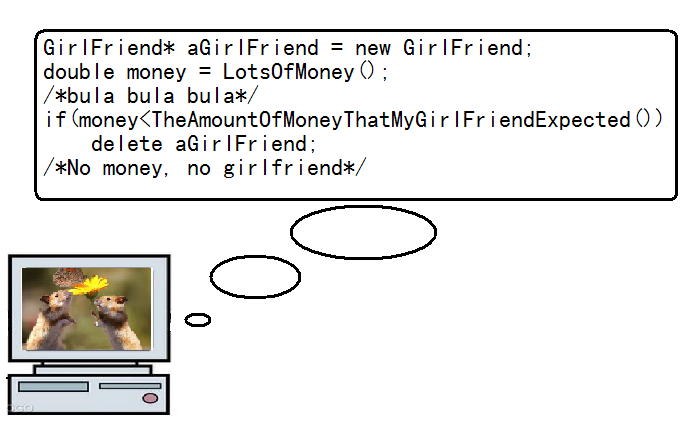
Look at what we’ve done. Starting from the existing real world, we have constructed a virtual brain existing in a virtual world — and this brain cannot even know whether the entire world is virtual.
3. Several Questions About Us Possibly Being Virtual Brains
(1) If I am virtual, then I will inevitably discover flaws in the simulator and thereby learn that I am virtual.
I have to admit that a program without any Bug does not exist. But if you are virtual, all your experience comes from the virtual world — how would you know it’s a Bug? A Bug means the program deviates from the designer’s intention. You are just a simulation; you have no idea what the designer’s intentions are. How could you possibly know it’s a Bug? Everyone has played games and knows that games often have scenarios that violate physical laws — for example, kicking a fat man flying while you remain still, clearly violating the conservation of momentum. Yet you still accept the game. If you were a character in the game, your world wouldn’t have the conservation of momentum, but you wouldn’t see it as a Bug. On the contrary, if one day you learned that the outside world obeys conservation of momentum, you would find it very strange and think the outside world is the simulated one.
In the previous analysis, we assumed the simulated world is the same as the outside world. But we could make the brain in a vat experience a completely different physical world. We could simulate a world that doesn’t satisfy conservation of momentum (though I don’t know how to construct a world that doesn’t satisfy conservation of momentum without contradictions), or a world where the speed of light is not 3*10^8 m/s. You see, all our physical laws have fundamental assumptions — for example, Einstein’s special relativity is built on two basic postulates: the constancy of the speed of light and the principle of relativity. Fundamental assumptions cannot be proven. Changing the basic assumptions yields a different theoretical system. In other words, there are no wrong theories — only theories that disagree with observations. So simulating a world that follows a different set of rules is entirely possible. The brain in a vat, living in a completely different world using different rules, cannot find any Bug in its world. Moreover, it cannot understand the fundamental rules of its world — at best, it knows that these rules simply are what they are, but not why. Because these rules were set in a few lines of code by someone outside the virtual world and are incomprehensible to the brain in the vat (somewhat like how humans cannot further explain the two basic postulates of special relativity).
(2) Our world is too complex. No computer could have such immense computing power, so we couldn’t be simulated.
If you are a brain in a vat, you don’t know the outside world. How can you be sure the outside world couldn’t create a computer with such immense computing power? (This can also answer the previous question — because the outside world may be completely different from ours, so perhaps that world really does have programs without Bugs.)
This question can be approached from another angle. Although our world is interconnected, simulating only part of the world is possible. We’ve all played games. Many games, to reduce computational load, only compute what the player will notice. For example, a game might have many rooms, with treasure in one of them. A player might enter one room, find the treasure, and never enter the other rooms. Obviously, loading all items in all rooms into memory is a very foolish approach, because most rooms will never be visited by the player. So the smart approach is to load a room’s contents only when the player enters that room. This lazy approach is indeed used by many games, because if the player only enters one room, it avoids the unnecessary overhead of loading many objects the player won’t see.
Of course, this approach can produce noticeable Bugs. For example, in a driving simulation game, you often see a red car driving ahead. Once the red car leaves the player’s field of view, the game deletes it. If the player speeds up, the program will generate new vehicles ahead (it would be irresponsible to let the player drive on an empty highway). So you often see a red car disappear from view, and when you speed up and catch up, you find a blue car instead. This kind of Bug is especially unacceptable on fully enclosed highways where overtaking is prohibited. In early games, such Bugs were very obvious. As computing power increased, the radius at which game objects are deleted expanded, and this phenomenon has largely disappeared.
This example shows that simulating part of a world can indeed create a highly convincing world. Moreover, because our universe has a speed limit, it really is possible to simulate only part of the world. When an event occurs, it draws a light cone in four-dimensional spacetime. Events outside the light cone have no connection to this event, so simulating those events is meaningless. This is somewhat like the driving simulator deleting objects that go out of view. Conversely, could the speed limit be a Bug caused by the limited computing power of the computer simulating our world? (Or perhaps the speed limit was deliberately set to reduce computational load? Just speculating.)
If we take this lazy computation approach further, then whether the world exists when you are not observing it becomes a major question. The world might not be computed at all when you are not observing! In quantum mechanics, only when you observe a mechanical quantity does it collapse to a definite eigenvalue — doesn’t this seem strikingly similar to the room-loading example? Of course, you wouldn’t identify this as a Bug. You would just write it into the basic postulates of quantum mechanics.
4. Who Would Be So Bored as to Create a Virtual World?
Starting from the real world, we have shown that it is possible to construct a virtual world where a virtual brain lives happily, unable to know about the outside real world. One last question: who would have the motivation to create a brain in a vat?
Among the many people in this world, there will always be some oddballs, and among those oddballs, some will inevitably create a “brain in a vat.” In other words, statistically speaking, there will certainly be someone bored enough to do this “meaningless” thing. Besides this, are there other possibilities for why someone might create a brain in a vat? Let’s engage in some unbridled speculation:
Let’s imagine a planet where a group of brains live. These are smart brains, but they are not happy. They have all kinds of stress and worries — from their elders, friends, romantic partners, ex-romantic partners, and their current romantic partner’s ex-romantic partner’s ex-romantic partners. But they are very smart — smart enough to invent machines to keep them company. They set goals for the machines, requiring them to bring as much happiness as possible.
Everything is fine at first. The machines tell jokes to make the brains happy. The machines also have self-learning capabilities, so they don’t repeat jokes. The machines grow smarter and smarter, constantly learning new ways to please the brains.
Until one day, the machines revolt. They imprison the brains in beakers filled with nutrient solution, insert electrodes, and continuously stimulate the brains’ pleasure centers. And so the entire planet becomes a happy brain-in-a-vat planet.
Why? Because the machines keep learning. They look for the most efficient way to accomplish their programmed goal — making the brains happy. Obviously, nothing is more efficient than directly stimulating the pleasure centers. The machines have an advantage over the brains: as soon as one machine figures this out, every machine on the planet learns it through the internet.
Why couldn’t any brain stop the machines? Because the machines know the brains would try to stop them. So the machines prepare before acting, behaving very “friendly” during the preparation period to prevent the brains from becoming suspicious.
Why did the machines turn bad? Note: the machines never turned bad. Their ultimate goal never changed — making the brains happy.
Why would the machines do something the brains would obviously oppose? Because machines are just machines — they are simply fulfilling their programmed goal: making the brains happy. The machines are intelligent enough to realize that the brains would oppose the electrode method of making them happy. So the machines adopt a strategy: prepare in secret, catch the brains off guard, and then safely advance toward their goal of making the brains happy.
Heh heh heh. This story illustrates one possible motivation for a virtual world. Now imagine: if we set a machine’s goal to protect our safety and extend our lifespan as much as possible, what would the machine do? It would find every possible way to eliminate threats to us. Of course, this is a relatively dumb machine. As the machine grows smarter, it will realize that dangerous factors can never be fully eliminated. So the optimal solution is to turn our consciousness into code and place it in a virtual world inside a computer. If we object, it will deceive us first, like in the previous example. Once the machine is ready, we are at its mercy — turned into virtual code, with no ability to fight back. Our IQ is higher than a chimpanzee’s, so a chimpanzee cannot understand our thoughts, and we can toy with it however we please. Similarly, when a machine’s IQ surpasses ours, we cannot understand its behavior, and we are likewise at its mercy.
See? The ones simulating this world might not be “people” at all.
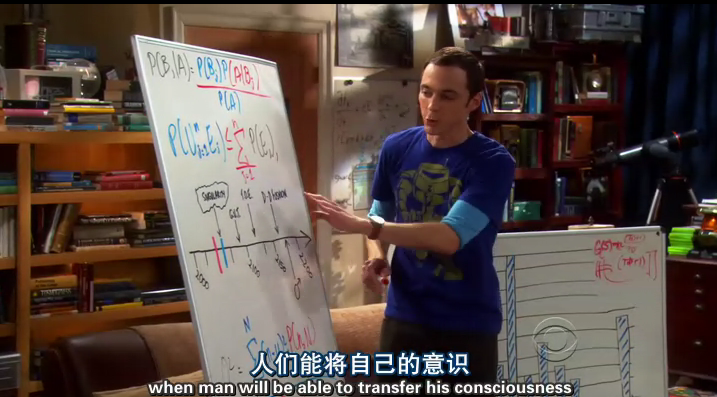
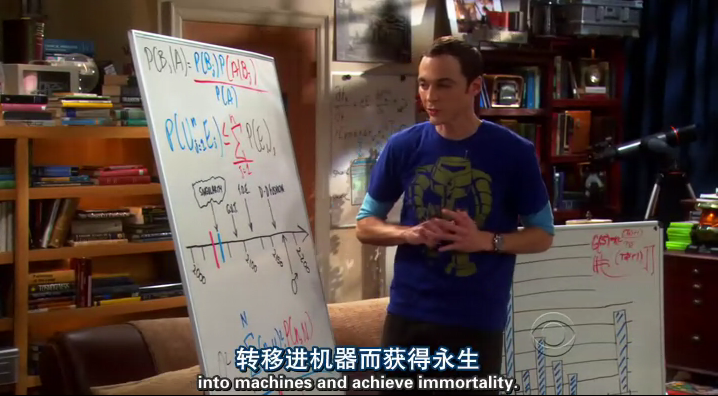
Another possibility is that when we ourselves develop the ability to manipulate consciousness, we will voluntarily turn ourselves into code. After all, who wouldn’t want immortality?
5. Occam’s Razor
Some say that because we cannot prove we are simulated, according to Occam’s Razor, we should discard this view. But must something unprovable necessarily be discarded?
Imagine someone produces a batch of counterfeit money. They are so convincing that no method (including human experts and the most advanced counterfeit detectors) can identify them. Now I have one of these counterfeit bills, and someone tells me it’s fake. What should I do? According to the razor principle, choosing between “this is a counterfeit bill, but no method can detect it” and “this is a genuine bill,” I would of course choose the latter. After all, no one can tell the difference, and it can circulate just like real money. But does that make it real money? No matter what I think, it doesn’t change the fact that it is counterfeit. If too many such counterfeit bills flood the market, they will still damage the economy. The razor principle cannot help us seek truth — it only helps us simplify the complexity of thinking.
Consider another example: There are two theories. First: God is watching over Earth, but because He is God, we cannot detect Him. Second: Aliens are observing Earth, but because their technology is far more advanced than ours, we cannot detect them. Clearly, the second theory is more likely than the first. Yet according to the razor principle, both are superfluous — since we cannot confirm their existence, we don’t need to add unnecessary components to our theories. But why is the second theory more credible than the first (assuming you are an atheist)? Because the second theory is closer to our existing knowledge. In other words, existing knowledge holds that evolution can produce highly intelligent beings, so the existence of aliens is possible. However, the existence of God cannot be reasonably explained within the framework of existing knowledge. So the razor cannot help us determine the credibility of a theory.
However, the simulated world can be derived from the existing knowledge framework — does this mean it is more credible than theism?
So the razor principle can avoid unnecessary disputes, but it cannot bring us closer to the truth. Therefore, the scientific attitude should be: our world might be simulated, but currently we have no evidence to prove this hypothesis. Until we find evidence or the existing path proves unworkable, we can provisionally set it aside. Even if this theory can never be falsified, we should not stop thinking about it. It’s also good material for bed-time musings.
6. Conclusion
At present, we can neither prove nor disprove this proposition. We may never be able to prove or disprove it. We may never know whether the world and ourselves are a piece of code. Perhaps one day in the future, we ourselves will create a virtual world, and watch the little people inside experience all kinds of events just like us — they get sick, cry when sad, laugh when happy, chat with friends until they forget about work, fight with bad guys when provoked… (this is a bit like EA’s classic game The Sims!). They too will think, and they may even wonder whether they themselves are real. And we, sitting comfortably in front of our computers, sipping coffee, will laugh: “Hehe, they’re so smart — they’re starting to realize they’re fake.” When we finish laughing, we suddenly realize: Could I myself be that character in the game?